

Published by: Private Lending Group | privatelendinggroups.com | 312-938-0492
Category: Investor Education | Fix and Flip | Real Estate Investing Chicago
The difference between a profitable flip and a painful loss often comes down to a single hour of math before you make an offer. Experienced investors don’t rely on gut feel — they run the numbers. Every time. In every market.
This guide gives you the exact formulas, a worked example using a realistic Chicago-area deal, and the benchmarks you need to quickly decide whether a property is worth pursuing.
The State of Fix-and-Flip in 2025
Before we get into the calculator, a word on market context. According to ATTOM Data, the national average gross ROI on house flips fell to approximately 23–25% in 2025 — the lowest level since 2008. The median gross profit nationally was around $60,000–$66,000 per flip, down from $77,000 in 2024.
What does this mean for you? It means the easy money era is over. Markets where investors could overpay, under-renovate, and still turn a profit are largely gone. Today’s successful flippers — especially in competitive Midwest markets like Chicago — are rigorous deal analysts who work the numbers before they fall in love with a property.
The good news: the Chicago metro, including suburbs like Berwyn, Chatham, Norridge, and Hanover Park, continues to deliver strong flip margins for investors who pick the right deals. The numbers still work — you just have to run them first.
The Five Core Numbers in Every Flip
Every fix-and-flip deal can be reduced to five numbers. Know these before you make an offer.
- Purchase Price (PP): What you pay to acquire the property, including any closing costs at acquisition.
- Renovation Cost (RC): Total cost to bring the property to finished, marketable condition. Be honest. Budget overruns are the #1 killer of flip margins.
- Holding Costs (HC): The monthly cost of owning the property while you renovate and sell — loan interest, property taxes, insurance, utilities. Multiply your monthly cost by your estimated hold time in months.
- Selling Costs (SC): Agent commissions (typically 5–6%), transfer taxes, closing costs at sale. Budget 8–10% of your sale price.
- After-Repair Value (ARV): The market value of the fully renovated property based on comparable recent sales. This is your revenue ceiling.
The Core Formulas
Net Profit: ARV – Purchase Price – Renovation Cost – Holding Costs – Selling Costs
ROI %: (Net Profit ÷ Total Cash Invested) × 100
Total Cash Invested: Down Payment + Renovation Cost + Holding Costs + Selling Costs
Maximum Allowable Offer (MAO): ARV × 0.70 – Renovation Cost
The MAO formula is the single most important guardrail in fix-and-flip investing. It tells you the highest price you can pay for a property and still hit a healthy margin. Most experienced investors use 65–70% of ARV as their ceiling.
Worked Example: Chicago-Area Bungalow Flip
Let’s run a real-world scenario using numbers common to the Berwyn and Oak Lawn markets.
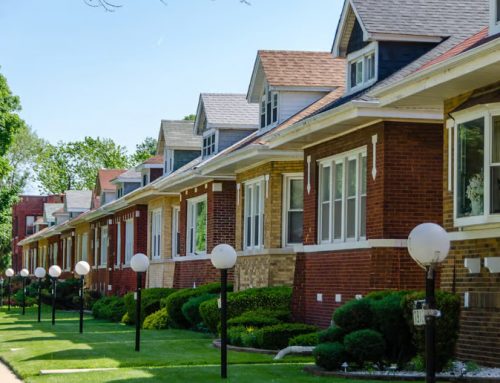
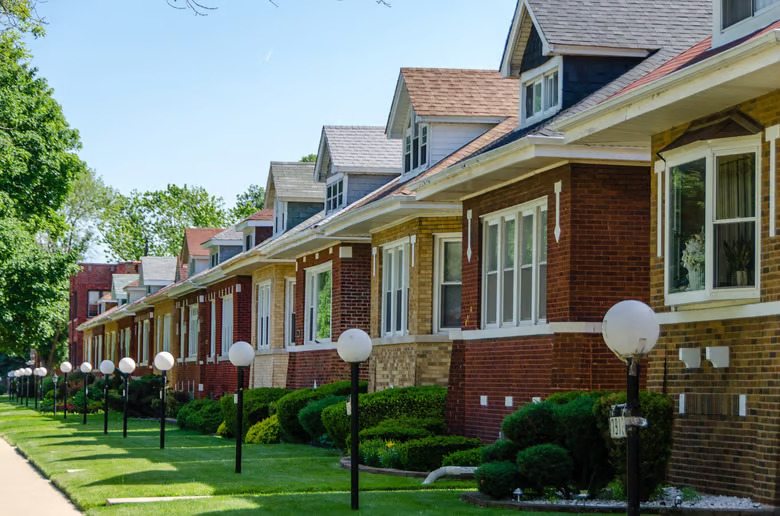
Property: 3BR/1BA brick bungalow, needs full renovation
Target ARV: $320,000 (based on comparable renovated sales in the zip code)
Purchase price: $175,000
Renovation budget: $65,000 (kitchen, bath, flooring, windows, HVAC)
Loan from PLG: $156,000 at 11% for 6 months = ~$8,580 in interest
Property taxes + insurance (6 months): $3,200
Total holding costs: $11,780
Selling costs (8% of ARV): $25,600
Running the Numbers
Net Profit: $320,000 – $175,000 – $65,000 – $11,780 – $25,600 = $42,620
Total Cash Invested: ~$84,000 down payment + $65,000 renovation + $11,780 holding + $25,600 selling = $186,380
ROI: ($42,620 ÷ $186,380) × 100 = 22.9%
MAO Check: ($320,000 × 0.70) – $65,000 = $224,000 – $65,000 = $159,000 MAO
At $175,000 purchase price, this deal is slightly above the strict MAO — meaning the margin is thinner than ideal but potentially acceptable if the ARV is well-supported and your renovation budget is locked. If you negotiate the purchase down to $160,000, your net profit jumps to approximately $57,620 and your ROI climbs to roughly 27%.
This is exactly why every thousand dollars you negotiate off the purchase price matters more than any other variable in the deal.
The Variables That Kill Flip Margins
In our experience funding hundreds of fix-and-flip deals across the Chicago metro, these are the most common sources of unexpected losses:
Renovation budget overruns: Investors consistently underestimate renovation costs. Add a 10–15% contingency buffer to every budget. If you’re estimating $60,000 in rehab, plan for $67,000–$69,000.
Hold time creep: Every additional month on a hard money loan adds interest costs directly to your expense column. A renovation you planned for 3 months that takes 5 months can erase $4,000–$8,000 in profit depending on your loan balance.
Aggressive ARV: New investors tend to use the best comparable sale in the neighborhood as their ARV target. Experienced investors use the median. Be conservative — your buyers’ appraisers will be.
Overlooked holding costs: Property taxes, insurance, utilities, and lawn care add up. Budget them explicitly, not as an afterthought.
Selling costs underestimated: Don’t forget transfer taxes, which in Illinois add meaningful closing costs. Budget 8–10% of your ARV for a safe selling cost number.
Benchmarks for a Healthy Chicago-Area Flip
- Minimum net profit target: $40,000+ (enough to justify the risk and time)
- Target ROI: 20–30% on cash invested
- Purchase price ceiling: 65–70% of ARV minus renovation costs (MAO formula)
- Renovation budget: confirmed with at least one contractor bid before closing
- Hold time budget: plan for your estimate plus 30–60 days of cushion
How Hard Money Financing Affects Your ROI
One of the most important factors in your ROI calculation is the cost of your capital. A hard money loan at 11% interest on a $156,000 balance for 6 months costs approximately $8,580. That’s real money — and it comes directly out of your profit.
This is why Private Lending Group’s 7-day closing capability isn’t just a convenience — it’s a financial advantage. When you can close faster, you can negotiate harder on purchase price. When you can move on distressed properties that banks won’t finance due to condition, you gain access to deals that your competition can’t reach.
The cost of hard money is real. But so is the cost of missing the deal entirely because your bank took 45 days.
Private Lending Group funds fix-and-flip loans across Chicago and suburbs. No tax returns. No minimum credit score. Written approval in 24 hours. Call 312-938-0492 to run your next deal by us before you make an offer.


Leave A Comment